BAU Has a Commitment Agianest Modern Slavery
BAU’s Policy Commitment Against Modern Slavery
Al-Balqa Applied University (BAU) is committed to safeguarding human rights and providing a fair, safe, and healthy working and learning environment for its employees, students, contractors, partners, and other stakeholders. In accordance with the Constitution of the Hashemite Kingdom of Jordan, applicable Jordanian legislation, relevant international labour standards, and the principles of the International Labour Organization (ILO), BAU works to prevent and eliminate all forms of modern slavery, including forced labour, child labour, and human trafficking.
BAU operates within the principles established under Chapter Two of the Jordanian Constitution – Rights and Duties of Jordanians, including Articles 6 and 23, which provide the constitutional foundation for equality, human dignity, and the protection of rights. Jordan has also established a national legal framework to prevent and combat human trafficking and protect victims’ rights. In accordance with this framework, BAU is firmly committed to prohibiting forced labour, modern slavery, human trafficking, and other forms of labour exploitation within its operations, activities, contractual relationships, and supply chains.
BAU also complies with the applicable provisions of the Jordanian Labour Law and its amendments concerning the employment and protection of young workers. Under Article 97 of Jordanian Labour Law No. 8 of 1996 and its amendments, workers between 16 and 18 years of age are subject to specific legal protections and restrictions. BAU’s employment records confirm that the University does not employ individuals within this age category, supporting its commitment to preventing child labour and ensuring compliance with national labour requirements.
Through its Modern Slavery Policy, BAU promotes respect for human dignity and workers’ rights and seeks to maintain a safe, inclusive, and respectful environment for working and learning. The University promotes teamwork, respect for diverse opinions, and responsible conduct, and does not support activities or collaborations that encourage or contribute to human rights violations. BAU also expects its contractors, suppliers, partners, and other stakeholders to uphold human rights principles within their respective activities and relationships with the University.
The University further promotes awareness of human rights and ethical labor practices among its community and partners through guidance, awareness-raising, training, and open dialogue. These measures support the effective implementation of the University’s human rights commitments and contribute to their continuous improvement.
The Modern Slavery Policy was originally published in 2016 and has undergone subsequent formal reviews, including reviews in 2023 and 2025
- Policy Scope
BAU’s Modern Slavery Policy applies to university staff, students, contractors, stakeholders, and partners across relevant areas of university activity. Its scope reflects the University’s commitment to preventing exploitative labour practices not only within its direct operations but also in its contractual relationships and institutional collaborations.
- Policy Objectives
BAU’s Modern Slavery Policy is guided by the following objectives:
- Support compliance with Jordanian legislation and relevant international standards protecting workers’ rights.
- Prevent and eliminate forced labour, child labour, human trafficking, and related forms of exploitation.
- Foster a respectful workplace that values diversity, teamwork, and human dignity.
- Build awareness among staff, students, and partners regarding human rights and ethical labour practices.
- Strengthen responsible practices and accountability across University operations and collaborations.
- implementation and Institutional Procedures of Modern Slavery Policy
BAU supports the implementation of its policy through procedures and practices intended to protect rights, promote ethical conduct, and prevent labour exploitation.
These include:
- Working Conditions and Protection of Employees’ Rights
BAU is committed to providing fair working conditions and protecting employees’ rights in accordance with applicable Jordanian legislation and University regulations.
- Working Hours and Overtime Compensation
BAU regulates working hours through its institutional regulations. The standard working schedule is eight hours per day, with a maximum of 40 hours per week and two days off weekly. Any additional hours worked are compensated through overtime pay in accordance with the applicable regulations, ensuring that employees receive appropriate compensation for work performed beyond their regular hours. The relevant provisions governing academic staff are set out in the Academic Staff Regulations.
Calculation of overtime Loads for Faculty Members and Lecturers
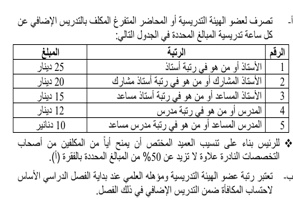
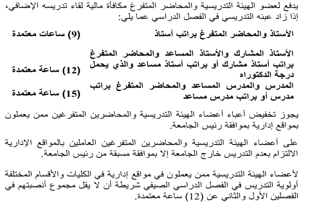
The University regulates the teaching workloads of full-time faculty members and lecturers according to academic rank: 9 credit hours for professors, 12 credit hours for associate professors and assistant professors holding a PhD, and 15 credit hours for instructors and assistant instructors. Teaching assignments exceeding the prescribed workload are considered additional teaching loads, in accordance with the applicable regulations. Teaching loads may be reduced for faculty members holding administrative positions with the approval of the University President. Faculty members may also teach at other universities for up to three additional credit hours, subject to the prior approval of the University President.
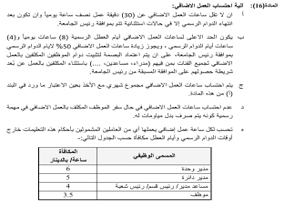
Instructions on Overtime Work, Rewards, and Incentives for Employees
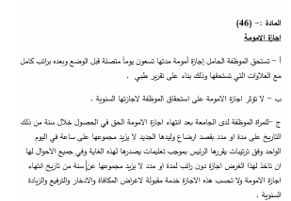
- Parental and Breastfeeding Leave
BAU provides parental leave entitlements in accordance with applicable national legislation and University regulations. Female employees are entitled to 90 days of maternity leave, while male employees are entitled to three days of paternity leave following the birth of a child. Eligible mothers are also entitled to one hour of breastfeeding leave per day, with flexible scheduling arrangements in accordance with the applicable regulations. Further details are available in the Administrative Staff Regulations.
- Prevention of Forced Labour and Modern Slavery
BAU strictly prohibits forced labour, modern slavery, child labour, and human trafficking through its Modern Slavery Policy and Code of Conduct and Ethics. These frameworks establish expectations for ethical conduct and respect for human rights, supporting a fair, safe, and respectful working environment for employees and other relevant stakeholders.
- Protecting Outsourced Workers
The university extends its commitment to protecting workers’ rights to employees of external contractors providing services across its campuses and affiliated colleges. Through its contractual arrangements and monitoring procedures, the University establishes accountability mechanisms designed to safeguard workers’ financial entitlements, promote fair employment practices, and reduce the risk of labour exploitation.
Under the documented contractual requirements, contractors must transfer employees’ salaries directly to their bank accounts and submit supporting bank confirmations, together with a list of employees paid, by the seventh day of each month. These requirements facilitate the verification of salary payments and help ensure timely fulfilment of wage obligations.
The link appears in the same way as the announcement for a tender to clean one of the university buildings.
- Academic Staffing Regulations
- Administrative Staff Regulations
- BAU Code of Conduct and Ethics
- Sustainable Procurement -Purchasing policy Ethical Sourcing