
BAU’s Pay Scale Equity Policy
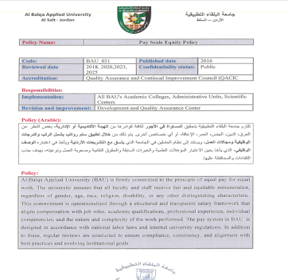
Al-Balqa Applied University (BAU) is committed to ensuring fair, transparent, and equitable remuneration for all academic and administrative employees through its officially approved and publicly available Pay Scale Equity Policy. Originally published in 2016 and most recently reviewed in 2025, the policy upholds the principle of equal pay for equal work, without discrimination based on gender or other personal characteristics.
BAU applies a structured salary framework in accordance with applicable Jordanian legislation and University regulations. Salaries and allowances are determined according to relevant job grades, academic or professional rank, qualifications, experience, job responsibilities, and the nature and complexity of the work performed.
Policy Scope and Objectives
The policy applies to all academic and administrative employees across BAU’s academic colleges, administrative units, and scientific centers. It aims to:
Strengthening employee confidence, retention, and institutional accountability through an equitable remuneration framework.
Ensure fair and equitable remuneration for employees performing comparable work.
Prevent gender-based pay discrimination and promote equal employment opportunities.
Maintain transparent and consistent salary-setting procedures.
Support employee development through fair performance evaluation and compensation practices.
Salary Structure and Equitable Remuneration
BAU applies a structured salary framework in accordance with applicable Jordanian legislation and University regulations. Article No. (2) on the Salary Scale in the University’s Salary and Allowances Regulation establishes the salary structure for academic, administrative, and technical employees according to job grade, category, and rank.
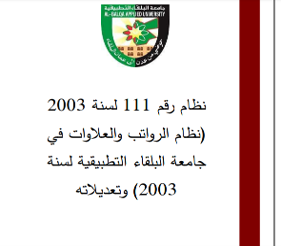
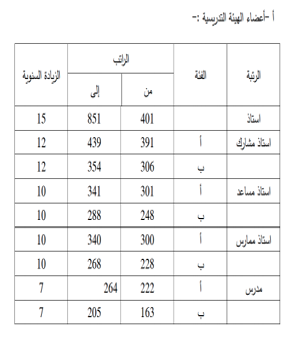
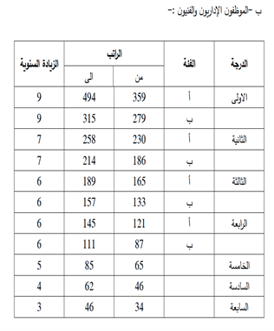
law No. 111 of 2003 (the law of salary and allowances)
BAU applies a structured salary framework in accordance with applicable legislation and University regulations. Article No. (2) of the University’s Salary and Allowances Regulation establishes the salary structure for academic, administrative, and technical employees according to job grade, category, and rank.
The salary framework provides common rules for determining remuneration and supports the principle that differences in salary and allowances should be based on legitimate and objective employment-related factors, such as job grade, academic or professional rank, qualifications, experience, responsibilities, and the nature and complexity of the work, rather than gender.
This regulatory framework supports BAU’s commitment to equal employment rights and responsibilities for female and male employees and to non-discriminatory remuneration practices.
Commitment to Measure and Eliminate Gender Pay Gaps
BAU is committed to measuring, monitoring, and taking action to eliminate gender pay gaps. Gender pay gap analysis and periodic reviews help the University assess remuneration practices, identify potential disparities, and inform evidence-based improvements to relevant policies and procedures.
The Gender Pay Gap Report 2025 provides supporting evidence of the University’s efforts to assess pay equity. The findings of gender pay gap analysis and related equality reviews inform institutional efforts to strengthen fair compensation and gender-responsive decision-making.
BAU’s commitment to gender equality also extends to its wider academic and administrative practices. Following gender pay gap analysis and related equality reviews, the University amended its scholarship instructions to strengthen gender equity. Under the amended instructions, female scholarship recipients studying abroad are permitted to bring their children and spouse with them. This measure helps address family-related barriers to educational and professional development and demonstrates the University’s commitment to promoting equal opportunities.
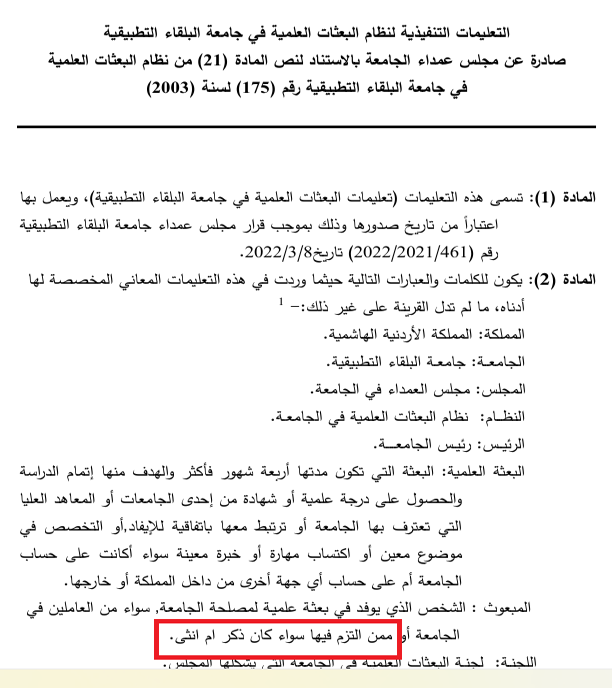
Al-Balqa Applied University amended its scholarship instructions to ensure gender equity, based on the results of the gender pay gap analysis and related equality reviews. This amendment included significant changes to the scholarship system for female students studying abroad, as it now allows female scholarship recipients to bring their children and spouse with them, whereas the previous system did not permit this. This amendment represents an important step toward empowering women and providing the necessary support for them to pursue higher education without social or family obstacles, reflecting the university’s commitment to fairness and gender equality in both academic and administrative policies.